

Out and About 2026 – Once Upon a Scotland
Explore the stories of Scotland’s myths and legends!
This summer, escape into the mystical world of Scotland. Explore fairy gardens, hunt for haggis or craft your own castle with our 2026 Out and About activity pack.
Once Upon a Scotland challenges you to uncover the many myths and local legends hidden in Scottish history.
How does it work?
There are 2 sections for this badge:
- Outdoor activities
- Indoor activities
To get your badge, please complete 2 activities. At least 1 of the activities you complete should be from the outdoor activities section.You can adapt the suggested activities to your local area, your unit and the abilities of your girls.
Don’t forget!
As always, please take note of the environmental and safety precautions, and remember to follow the relevant Girlguiding procedures. Check out the activity pack for more information.
We can’t wait to see what everyone gets up to! Share any posts on social media with us by tagging @GirlguidingScot
Take the challenge!
Check out the challenge pack for more information.
Get the badge
Get your Out and About 2026 badge online or in-store.
Next Stop Adventure partner assets
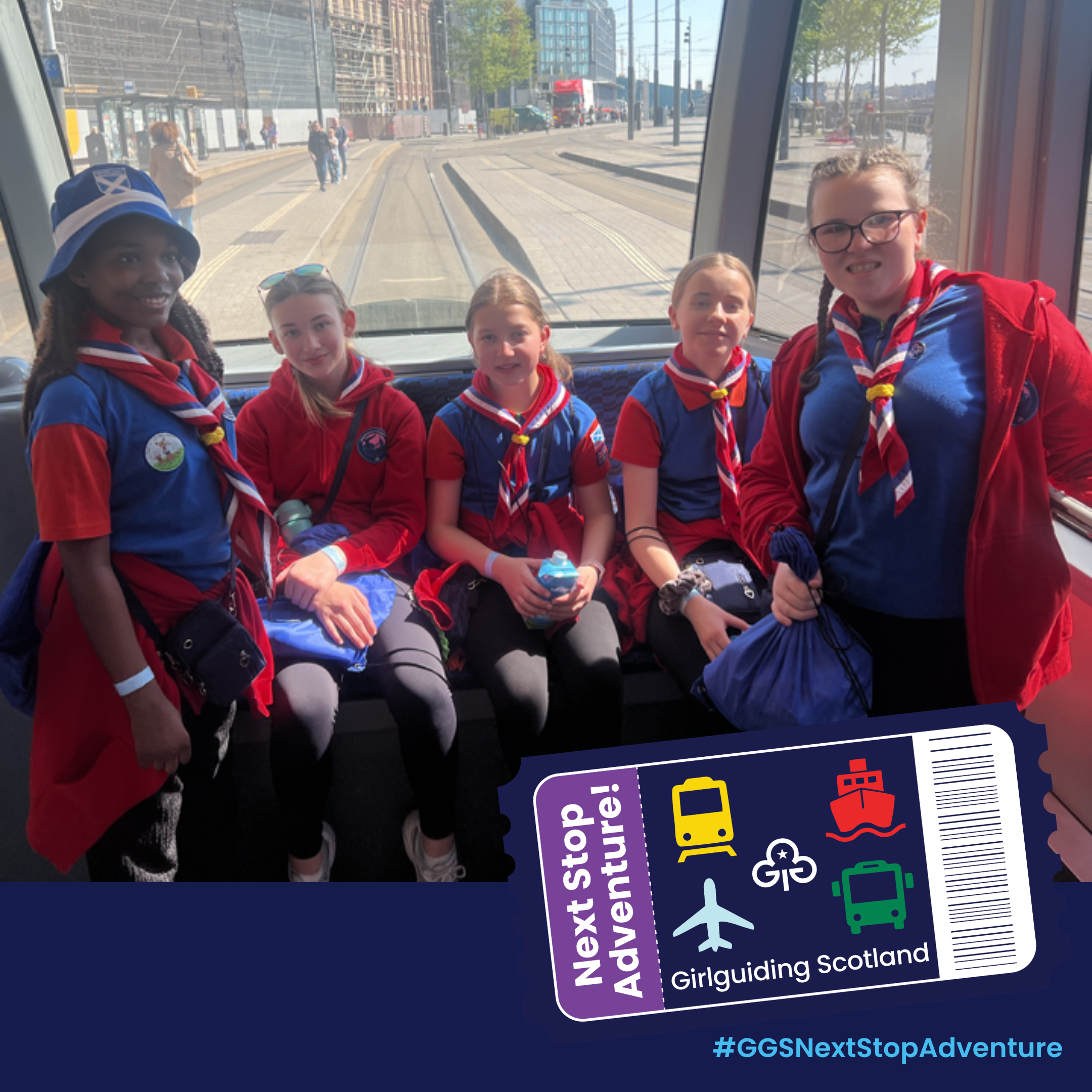
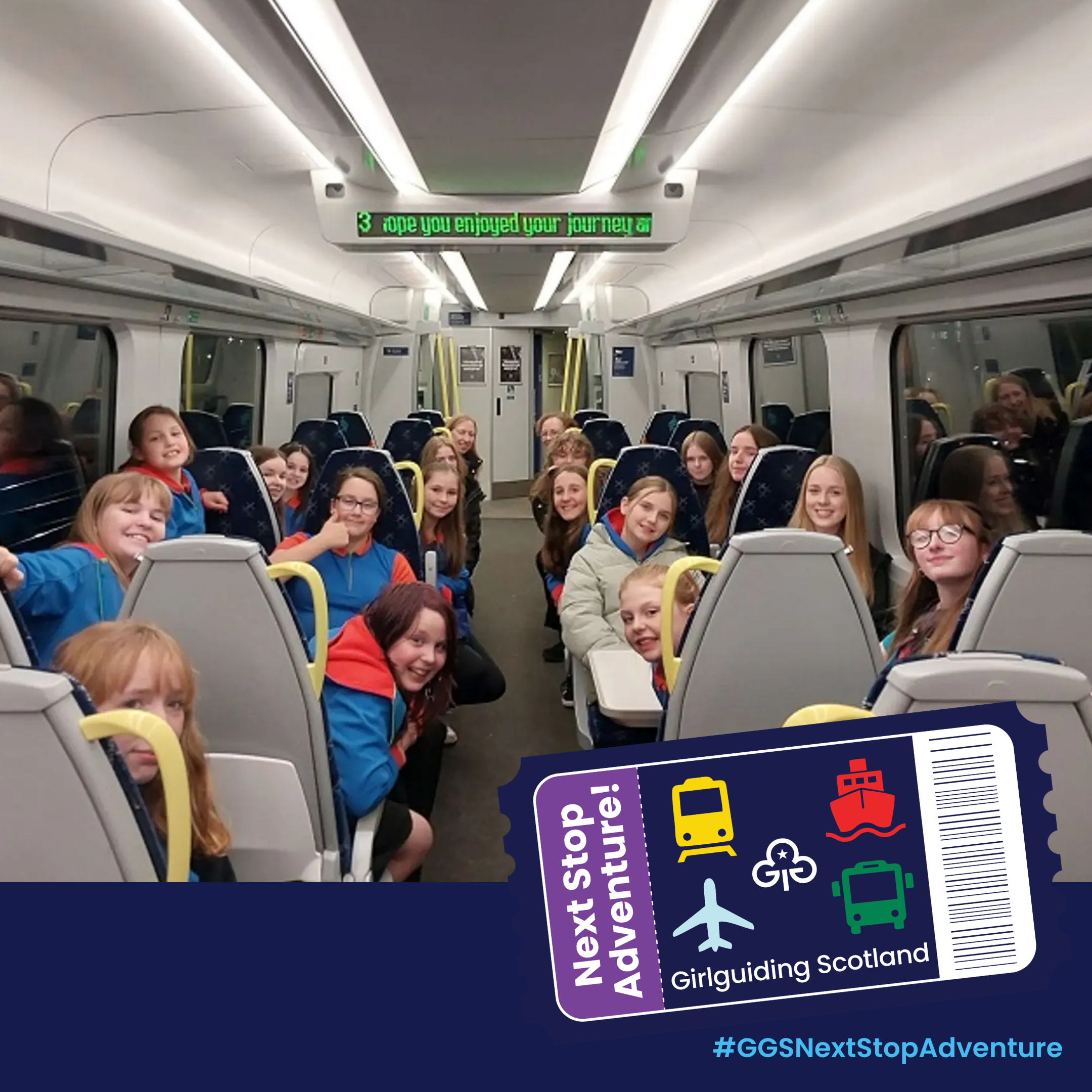
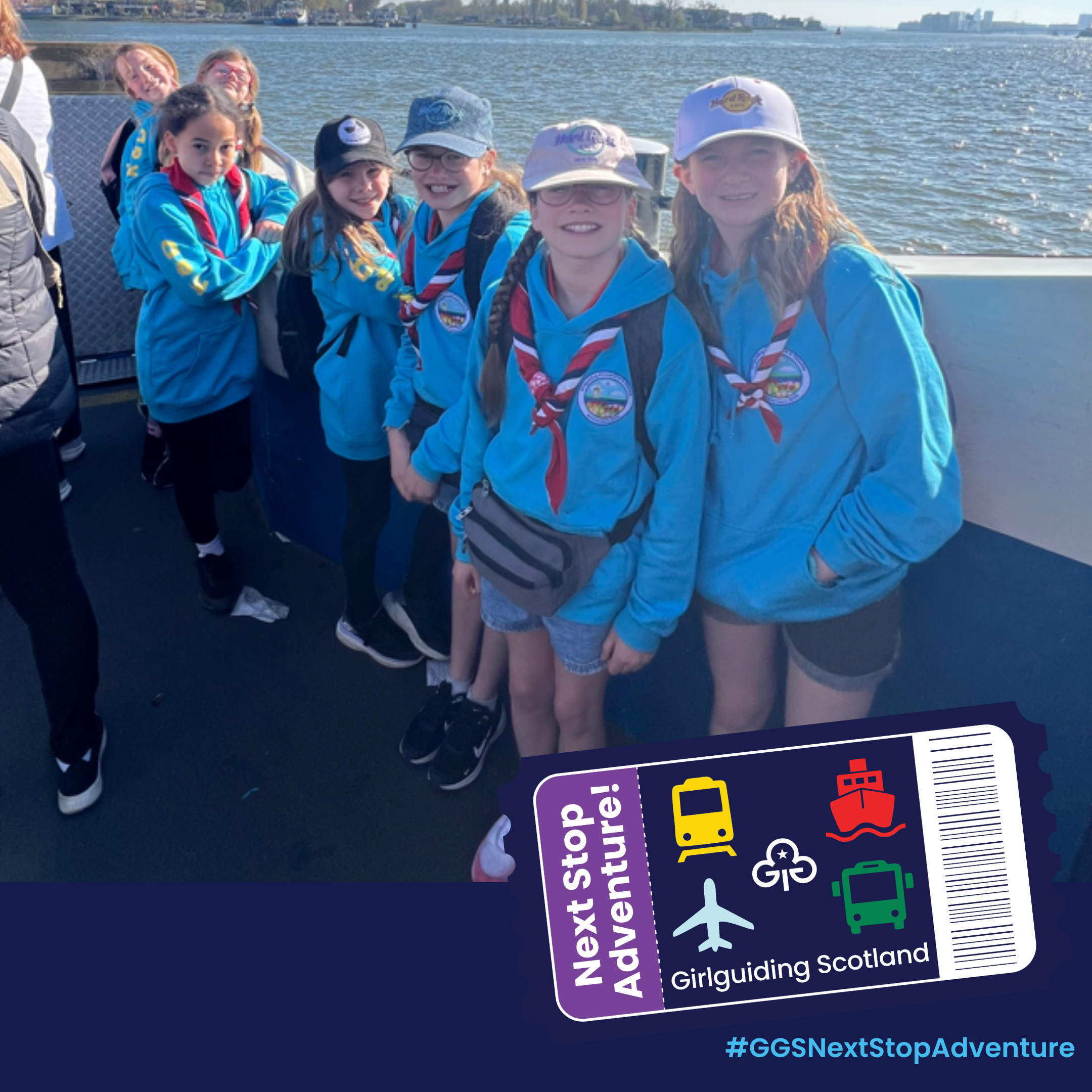
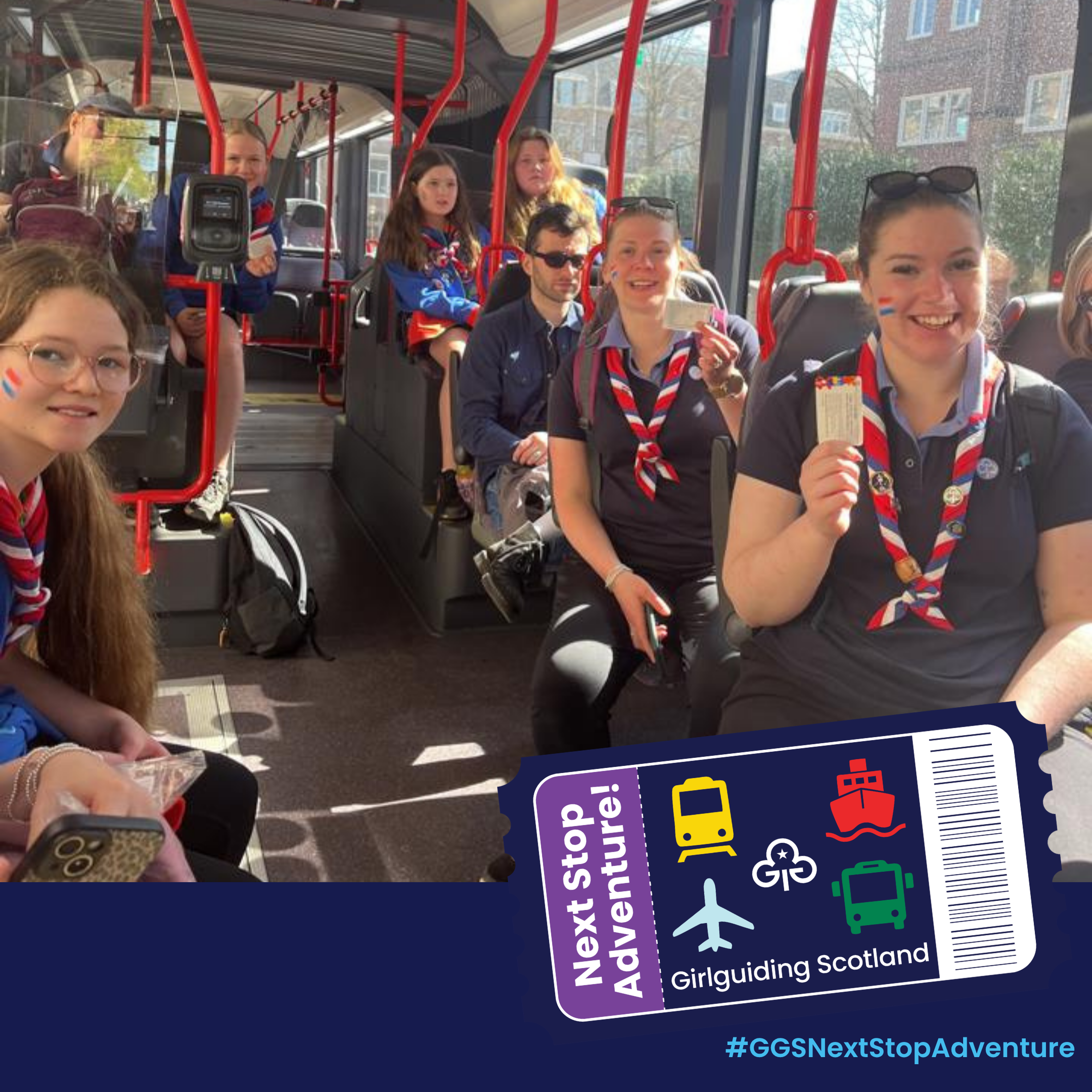
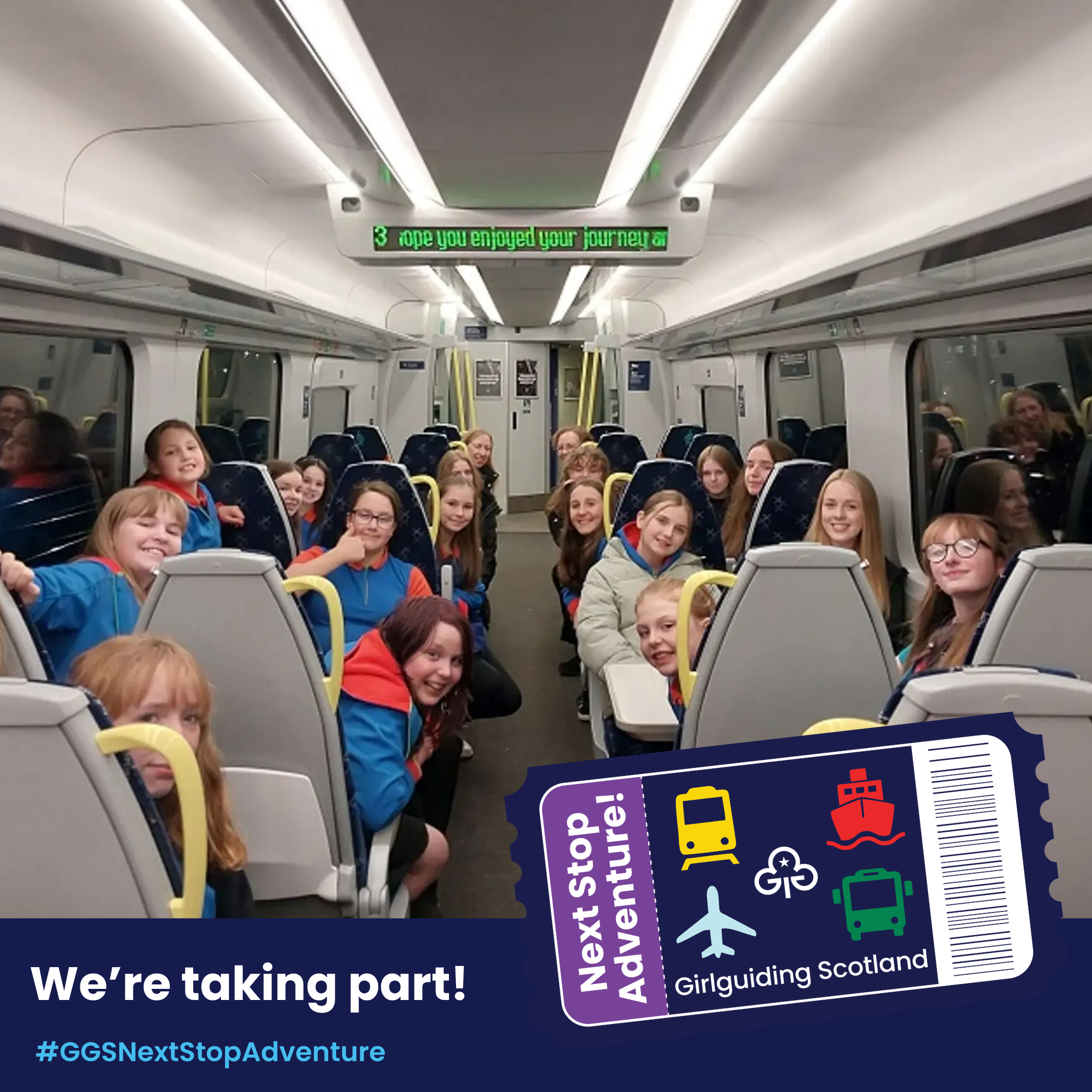
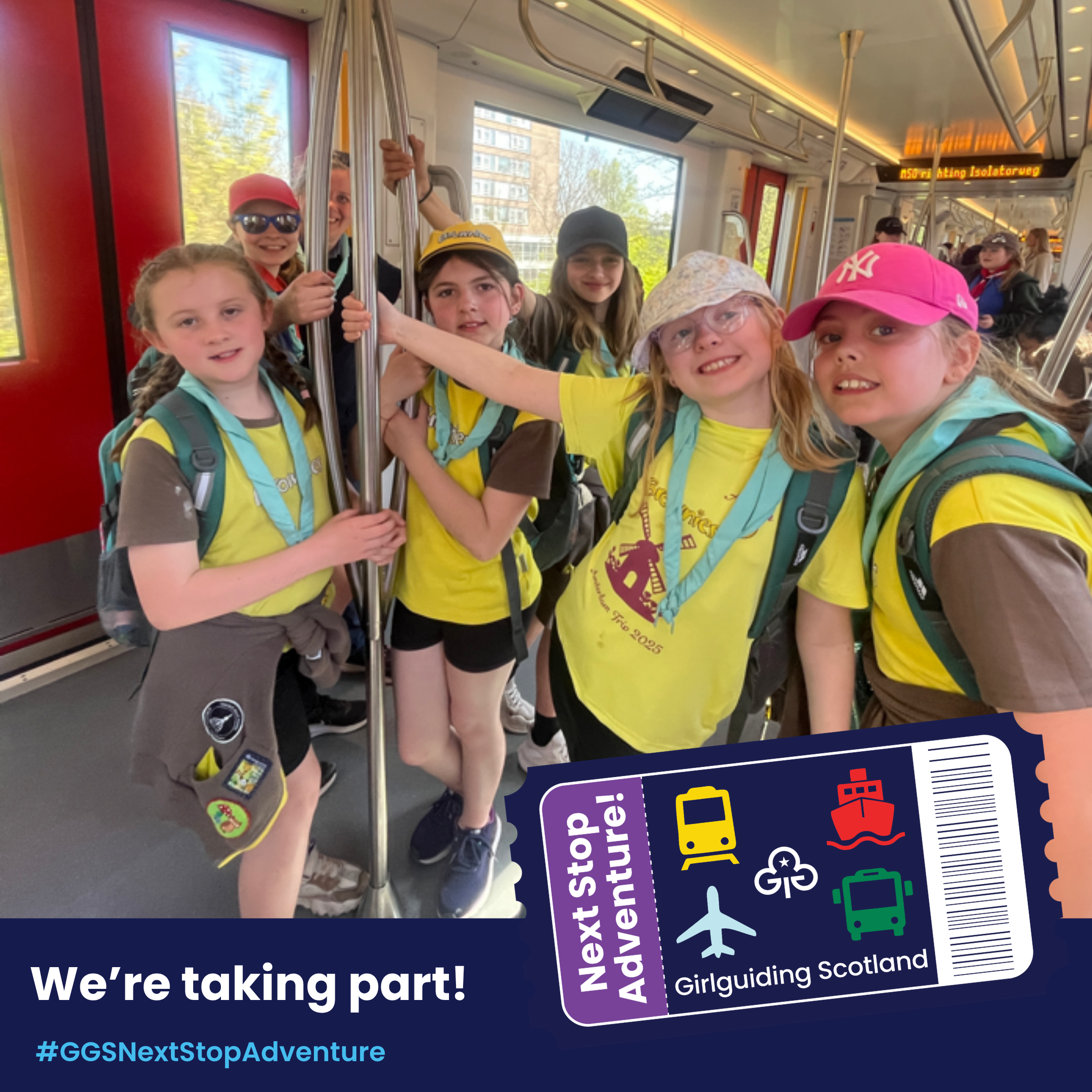
Join in with Next Stop Adventure on 16 May! Find our communications pack for partners here and download our helpful social graphics below. There’s space to add your logo and frames to add in your own images, as well as some that are ready to post.
We can’t wait to see you all getting involved, make sure to tag @GirlguidingScot and use #GGSNextStopAdventure.
Download the square graphics:


Download the 4:5 Instagram graphics:



Co-lead volunteer for Speak Out
The role
Would you enjoy working with young people to make Scotland a better place? Are you passionate about making sure our members’ voices are heard by decision makers? Are you keen to shape the next generation of campaigners?
As our co-lead volunteer for Speak Out, you will play a key role in delivering our Speak Out programme. Speak Out is Girlguiding Scotland’s youth advocacy panel, they lead and shape our advocacy strategy. Their training and development programme is designed to give girls the skills and experiences to be able to take action on issues that matter most to them. Through a series of residential, day and online events speak out champions will be upskilled and supported to make change on issues that matter to them.
In this role, you will lead the design and development of the next phase of the Speak Out programme, building on its strong track record of success. This will include working with young people, volunteers, and staff to shape an engaging, impactful model for the future. Subject to approval by the Operational Board, you will then co-lead the delivery of the programme, ensuring it continues to empower young people and drive meaningful change.
This is a co-lead role, and you will be working in partnership with another volunteer, supported by staff and a volunteer line manager. You are welcome to apply on your own, or as a team of 2 people.
The key skills and attributes that we’re looking for in this role are:
- Be enthusiastic about the importance of youth engagement and advocacy
- Be able to communicate with various volunteers and staff teams
- Be able to work as part of a team
- To be open, approachable and supportive towards the needs of local teams
- Be able to handle difficult conversations with tact and empathy
- Be able to understand the needs of different young people
- Have or be working towards your going away with qualification
At Girlguiding Scotland, striving to be an inclusive an impactful organisation is at the heart of what we do. We recognise that being a great volunteer isn’t just about the skills that you can bring to the table, but also the unique perspectives that come from your background and life experiences.
Apply now
Find out more and download the application pack today.
The deadline for applications is 11:59pm Sunday 10 May 2026.
Get more info
If you have any questions about the role or need help to apply, please get in touch with Katie Horsburgh, our lead volunteer for girl voice, on katie@girlguiding-scot.org.uk.
Chief executive officer
Applications are now closed.
Salary: £68-73,000 per year, dependent on experience
Job type: Permanent
Hours: Full time, 35 hours per week
Location: Here at Girlguiding Scotland we have adopted a hybrid work model that supports a blend of in-office and remote working, with our usual office days on Tuesday and Wednesdays. We’re based at Girlguiding Scotland HQ, 16 Coates Crescent, Edinburgh EH3 7AH.
Closing date: 9am on Tuesday 7 April 2026
First round interview date:Monday 27 and Tuesday 28 April
This is a really exciting time to lead Girlguiding Scotland. With nearly 40,000 young members powered by 9,000 volunteers we are the largest charity for girls and young women in Scotland. Girlguiding Scotland has been around for over 100 years and we have much to be proud of in that rich and vibrant history, but we know that to remain exciting and relevant to young people we must continually evolve.
As our chief executive, you will lead the staff team and play a key role working in partnership with the Scottish chief commissioner and her team, as they support the volunteers who deliver guiding in our communities. You will be a role model for members and an ambassador for the organisation in the wider Scottish community.
Purpose of the role:
- To lead the staff team, and – in partnership with a team of national volunteers – shape and deliver guiding in Scotland.
- To provide inspirational leadership for volunteers and staff and effective management of the staff team.
- To work closely with the Scottish chief commissioner and trustee board to ensure the charity is well governed.
- To work closely with the deputy Scottish chief commissioner to ensure the operational board effectively delivers on agreed projects.
- To act as a role model for members and be an ambassador for the organisation in the wider Scottish community.
- To provide a link between Girlguiding Scotland and Girlguiding (UK), fostering positive reciprocal relationships and ensuring ongoing alignment of vision, purpose and strategies.
How to apply
Applications are now closed.
We are working with AWS Executive on this recruitment. To find out more about the role, including the job pack please visit the recruitment microsite
Girlguiding Scotland values inclusivity, so we welcome requests for support or reasonable adjustments during the recruitment process. If you need any support to complete your application or with any other part of the recruitment process then please get in touch with our partners at AWS Executive, Donna McKay or Alan Surgeon
Support for young members – making guiding fun for everyone
We want everyone involved in Girlguiding to have a great experience, so it’s important we make sure all our groups and activities are safe, friendly and welcoming for everyone.
Additional Support Needs
Some of our young members may have additional support needs (ASN). Additional support needs are when someone needs extra support. This support can be both long and short term.
Young members may find out they have an additional support need by going to a healthcare specialist for a diagnosis. While waiting for a diagnosis some young people may choose to self-identify as having an additional support need.
Choosing to get a diagnosis is a personal choice for the young person and their family. Even if someone doesn’t have an official diagnosis, they should still be able to access support in Girlguiding.
In 2024 the Scottish Government looked at state schools across Scotland and found that more than 2 out of 5 pupils had an additional support need. (Scottish Children’s Services Coalition, 2024).
We don’t know exactly how many adults in Scotland have additional support needs, but we do know that more adults are asking healthcare specialists for support and diagnosis.
Providing Support
When planning activities, you can ask yourself some helpful questions to make sure you are including everyone:
- Are there young members who need extra support?
- Will they be able to take part in the activity?
- Will they be able to learn and do their best?
- Will they be supported?
There are lots of ways we can support young members to help them take part in and enjoy guiding. Support can be ‘universal’ or ‘targeted.’
- Universal support is support that helps everyone.
- Targeted support is support that helps someone with their specific needs.
Universal support
Universal support is about making sure everyone feels safe and supported. Sometimes we don’t know what everyone’s needs are, so universal support helps us plan activities for people with a wide range of needs.
For example, some people who are neurodivergent find support in structure and knowing what is going to happen during an event or meeting. To make sure neurodivergent people are supported, universally friendly places should be predictable and organised. To help with this, units can share the structure of meetings with their young members and prepare them for unexpected changes to normal activities.
Girlguiding should be a welcoming place where every young person can take part. So it is good practice to think about universal support when planning unit meetings and events.
Some other examples of universal supports include:
- Using cards to show what is happening ‘now,’ ‘next’ and ‘then’ during unit meetings. This is called a visual timetable.
- When planning a trip, showing the unit pictures of where they are going and what activities they will be taking part in.
- Including sensory resources like fidget toys, alternative seating and movement breaks as part of activity planning.
- Making sure young people have support with writing and reading. For instance, getting members to pair together for a writing activity, and using large print, easy read activity sheets.
- Preparing young members to move up into the next section by allowing them to visit their new unit or take part in joint activities with the new unit. For instance, a Brownie who is going to move on to Guides may visit a Guide unit, or the Brownie and Guide units can take part in an activity together. It’s important to plan and prepare young members for transitions so they feel ready for the change.
- When talking to your unit, make sure you are communicating in a way that’s inclusive. You can do this by giving information in small chunks, rather than all at once, and structuring information logically, for example: ‘First we will go into the room and then we will all sit down on the chairs’. Find more about inclusive communication here.
- Offering young members different ways to complete an activity.
Targeted support
Some members may benefit from targeted support. Targeted support is support that is made to help a young member’s specific needs.
Usually these supports would be written in an adjustment plan, a wellbeing plan, and/or a communication passport.
- An adjustment plan is a tool to help identify a young person’s needs and record adjustments to activities or tasks they need to take.
- A wellbeing plan is a tool to help young members and volunteers have open, supportive conversations about mental health and wellbeing.
- A communication passport is a tool to help with understanding a member’s communication style and needs.
Targeted support could be put in place at any point of a member’s guiding journey and can be temporary or longer lasting.
Adjustment plans should be written with the member and should be reviewed at least once a year. They should follow risk assessments, if required. New adjustment plans should be written for events and residentials.
For support, advice and guidance on any of the above, unit leaders can reach out to their county adviser or the Girlguiding Scotland’s lead volunteer for equity, diversity and inclusion on ashleym@girlguiding-scot.org.uk.
Large-scale camp team leads
To deliver a large-scale camp in 2027, we need a team of volunteers to help us cover a range of roles. Volunteers will work alongside our camp lead volunteers before the event to help with preparation, and then carry out their roles for the duration of the camp. The camp will take place at Fordell Firs Sunday 11 – Saturday 17 July 2027. Depending on your role you may be required to be on site the day before/day after.
The roles we are looking to fill currently are:
There will be more roles advertised at a later date. If you have any questions about these roles or need help with your application, please contact us on enquiries@girlguiding-scot.org.uk
Find more information and the role descriptions below. To apply, please fill in our application form by Monday 20 April. We will contact county commissioners for references and will look to hold informal chats with camp leads as soon as possible after the closing date.
Camp activities lead
The purpose of this role is to lead the planning and smooth delivery of activities across camp, making sure girls have a fun, safe, and well organised programme.
The key skills and attributes that we’re looking for in this role are:
- Having experience of large-scale camps would be advantageous
- Good organisational and communication skills
- Friendly and open
- Ability and willingness to work as part of a team
- Ability to inspire and engage others
- Experience of leading a team
- Willingness to travel to meet other volunteers
Apply now
Camp services lead
The purpose of this role is to help camp run smoothly behind the scenes by overseeing shared services such as catering, equipment, and site organisation.
The key skills and attributes that we’re looking for in this role are:
- Having experience of large-scale camps would be advantageous
- Good organisational and communication skills
- Friendly and open
- Ability and willingness to work as part of a team
- Ability to inspire and engage others
- Experience of leading a team
- Willingness to travel to meet other volunteers
Apply now
Sub-camp lead
We’re looking for 10 volunteers to be sub-camp leads. The purpose of this role is to help make camp fun, safe, and well‑organised by looking after one section of the site and supporting the volunteers and girls based there.
The key skills and attributes that we’re looking for in this role are:
- Having experience of large-scale camps would be advantageous
- Good organisational and communication skills
- Friendly and open
- Ability and willingness to work as part of a team
- Ability to inspire and engage others
- Experience of leading a team
- Willingness to travel to meet other volunteers
Apply now
Adjustment plans in 7 steps
What are they and how do I use them?
1. What are adjustments?
Adjustments are changes we make to remove or significantly reduce the barriers disabled people can face. When we remove these barriers, disabled people can be included, have independence, choice and control.
Barriers can be related to how we do things, the environment or even our attitudes:
- How we do things (systems and procedures)
- The environment (physical and sensory)
- Attitudes, prejudice or stereotypes
2. What are adjustment plans?
An adjustment plan is a practical tool to help remove barriers by identifying and recording adjustments. They’re a resource made to support a conversation.
The adjustment plan should always be completed with the young member or volunteer it’s for. If the member is under 16, their parent or carer must also be involved in the conversation. Every individual is unique in their needs, and their knowledge and experience will help to develop a supportive plan that meets their needs.
Adjustment plans will help you make changes in meetings and events to make sure all young members and volunteers have a great guiding experience and take part in all we have to offer.
3. Types of adjustment plans
Not all members and volunteers with an identified additional support need will require an adjustment plan, they’re not compulsory and can accompany risk assessment planning and other planning tools like wellbeing plans.
4. How do I complete an adjustment plan?
An adjustment plan is a tool for a conversation. Work through the questions in the adjustment plan together to get a better understanding of what adjustments might be appropriate. Always be positive and honest, and open about what might work and what might be difficult.
5. Reviewing a plan
Completing an adjustment plan is not a one-off process, it’s something that should be reviewed regularly. Additional needs and health conditions change over time.
6. Support and advice
Your county equity, diversity and inclusion (EDI) adviser(s) will be able to provide you with additional advice regarding specific adjustments.
Ashley, Girlguiding Scotland’s lead volunteer for equity, diversity and inclusion, can also provide further guidance and advice. Get in touch by emailing ashleym@girlguiding-scot.org.uk.
You can also contact Girlguiding UK for help on volunteersupport@girlguiding.org.uk.
7. Links and resources
Good Guiding Fund
This funding aims to help deliver good guiding, whatever that may look like in your area.
The Good Guiding Fund is now closed for applications.
Important dates for applicants
Units, districts and divisions can apply either for a £500 grant toward an international trip involving girls or up to £500 across 3 of the following categories:
- Meeting place rent (6 months maximum)
- Official guiding uniform (1 item per person max, official Girlguiding uniform only)
- If you are applying on behalf of a unit you can apply for subscriptions for girls
- Resources (including programme materials, badges and equipment)
- Leadership activities including trips for girls
- Training for adults
- Recruitment activities
- If you’re applying on behalf of a district or division, you can also apply for a contribution toward thanks and recognition activities
Counties can only apply for a £500 grant toward an international trip involving girls.
Support to apply
Click the buttons below to read more about each branch of the fund. As well as more information about who can apply and when the funding must be used by, you’ll find sample applications and a blank template form to help you prepare your application.
Apply for support with international Apply for support with other costs
Read more about how the fund has been helping units
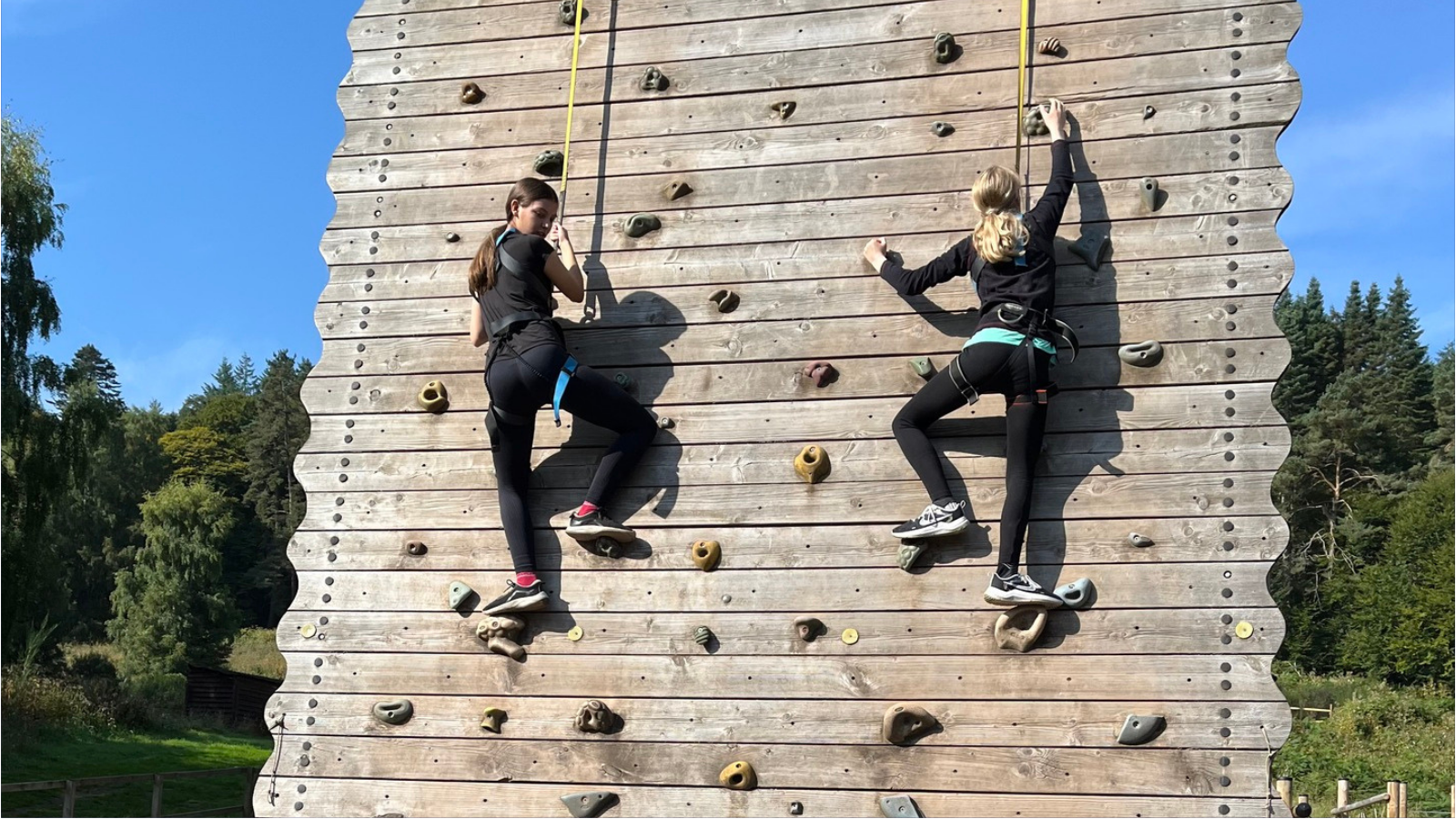
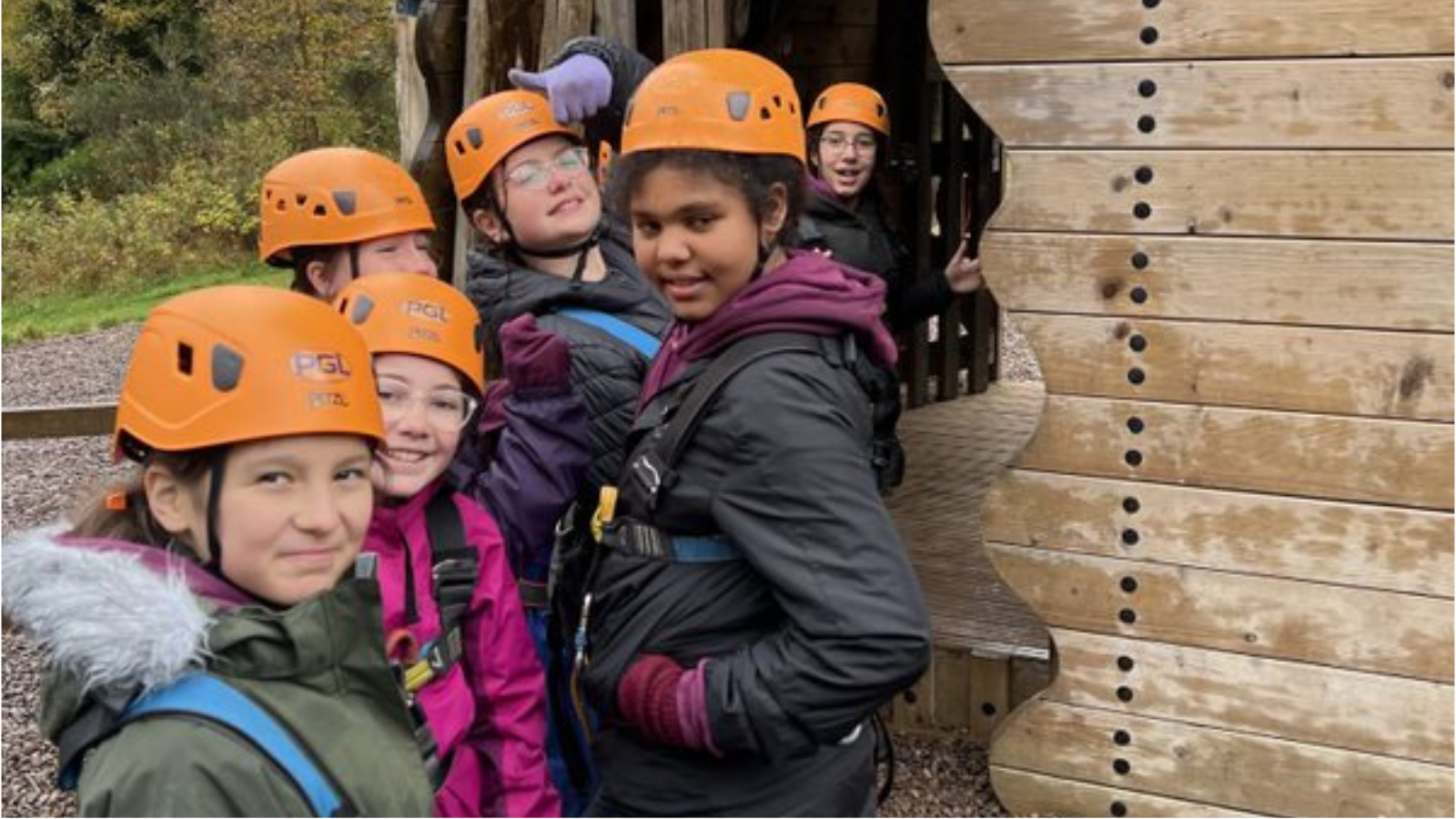
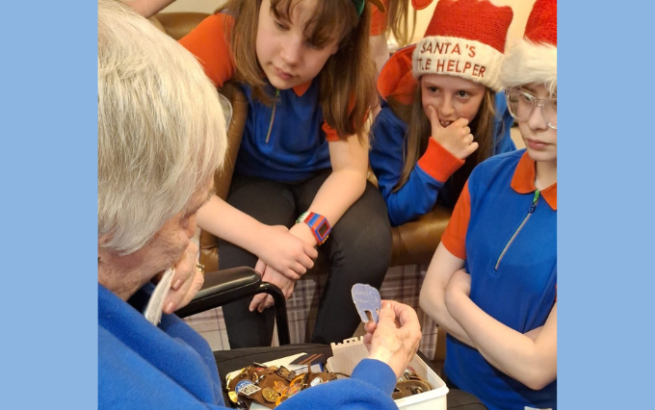
Good Guiding Fund support for international trips
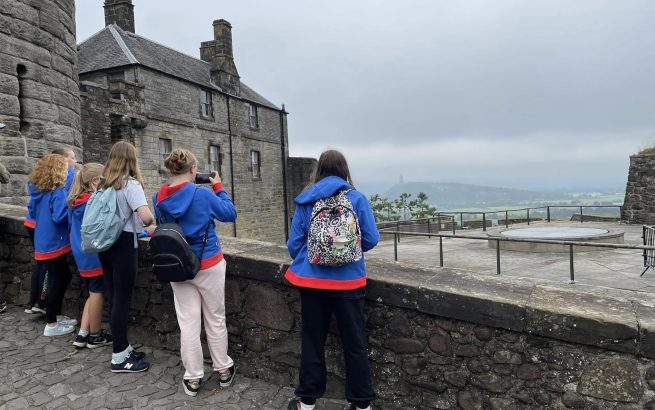
This strand of the Good Guiding Fund exists to supports units, districts, divisions or counties to take part in trips that involve travelling abroad with young member.
Grants of up to £500 are available to to help with to 3 of the following:
- Official Girlguiding uniform (1 item per person only)
- Travel costs including airport transfers
- Accommodation
- Catering
- Activities while abroad
Eligibility criteria
- The fund is open to Scottish units, districts, divisions and counties.
- Funding can only be used to support trips taking place after 1 July 2026.
- You can apply for funding if you already have permission to plan and REN part one signed off when your application is submitted. If you only have permission to plan, your application will be refused.
- You can only reapply for funding if your last Good Guiding Fund grant was offered before 19 July 2024 and you completed the associated evaluation form.
- Adult only trips are ineligible for funding.
- We will only consider 1 application per trip. If multiple units are taking part in the trip, please work together to coordinate your application. This helps to ensure we aren’t double-funding anyone.
- You can apply for up to £500 spread across up to 3 categories of support.
- Successful applicants will need to return an evaluation form within 6 weeks of the trip taking place. If you fail to complete the evaluation form, you will need to return the funding to Girlguiding Scotland.
- Units can’t be in receipt of Good Guiding Fund funding for general costs and international activities at the same time.
Guidance – how to maximise your chances of success
Your application should include when, where and how you will be travelling. It should also give us an idea of the benefits girls will get from taking part in the trip.
If applying for accommodation, travel costs, catering or activities, give as much detail as you can and include a per head cost. If applying for uniform costs please tell us what items you plan to use the funding for.
Please don’t apply for trip-specific wear as we will only fund official Girlguiding uniform.
The most common reason for refusing an application is that it’s been submitted too early. You can only apply once REN part one has been authorised by the international commissioner and Scottish and Scottish chief commissioner. This is the stage after permission to plan. Find our international REN timeline here.
How to apply
Applications are now closed.
We’ll aim to let you know the outcome of your application by 2 April.
If you need any help to complete the application from or have any questions not answered here, please contact us.
Registering as a charity, charity compliance and Gift Aid
Registering as a charity and completing your annual return
Being a registered charity can have a few benefits. It allows you to register to claim Gift Aid (please see below) and can mean that you have a wider choice of free banking options. It may also make your unit eligible for some external funding. If you would like to register your unit as a charity please use these guidelines to help you complete the OSCR online application form.
You can find information and a step by step guide on how to complete your annual OSCR return here. This guidance also contains help for registering your charity trustees (a new legal requirement for all charities in Scotland). Please be aware that from 2026 all accounts submitted to OSCR as part of annual returns, will be available as part of the charities listing on the register without redaction. Make sure that you only upload what is absolutely necessary, to ensure that you are not sharing unnecessary personal data
Registering for Gift Aid
Registering for and claiming Gift Aid can be a great way to boost your unit’s income without charging extra. For every £1 you collect as subs, you can claim an additional 25p. Learn more about what Gift Aid could do for you and your girls here.
To claim your unit must first be a registered charity. Once you have received your Scottish Charity number (SC0xxxxxx) from OSCR you can then register with HMRC for Gift Aid. You can start collecting Gift Aid declarations before you register for Gift Aid. After you register, claims can be backdated for up to 4 years – so make sure you’re not missing out on claimable funds.
To start the Gift Aid registration process, you’ll need to first complete the Scottish Gift Aid Certificate and send it to Girlguiding, before you register with HMRC. You can find the full process here.
Girlguiding units that are already claiming Gift Aid can use the Small Donations scheme. Within certain parameters 25% tax can be reclaimed on small donations under £20 where there is no signed declaration, such as bag packing.
If you have any questions about charity registration or claiming Gift Aid, please get in touch with the governance and compliance team on governance@girlguiding-scot.org.uk.
Choosing a bank account
The Girlguiding finance policy allows counties, divisions, districts, and units to open an account with any bank or branch as long as it is a recognised and well-known brand. The bank must also be part of the Financial Services Compensation Scheme (FSCS) and a registered banking organisation. The FSCS will protect funds of up to £85,000 in the unlikely event of a bank or building society failing.
A bank account should be in the name of the unit or level, as it appears on GO. If the name of the bank account and the unit or level is different, and this causes issues, the commissioner can insist that the bank account name is changed to match the name of the unit or level, as it appears on GO. A bank account must never be in the name of an individual.
Over the past couple of years, more banks are differentiating between organisations that are registered charities in their own right, and ‘community organisations’. This means that units, districts and divisions which are not registered charities, are finding that they are being charged for banking services.
We’ve pulled together information which we hope will be helpful in selecting a bank account. We’re not recommending any bank over another, and levels are free to choose to bank with institutions not on this list.
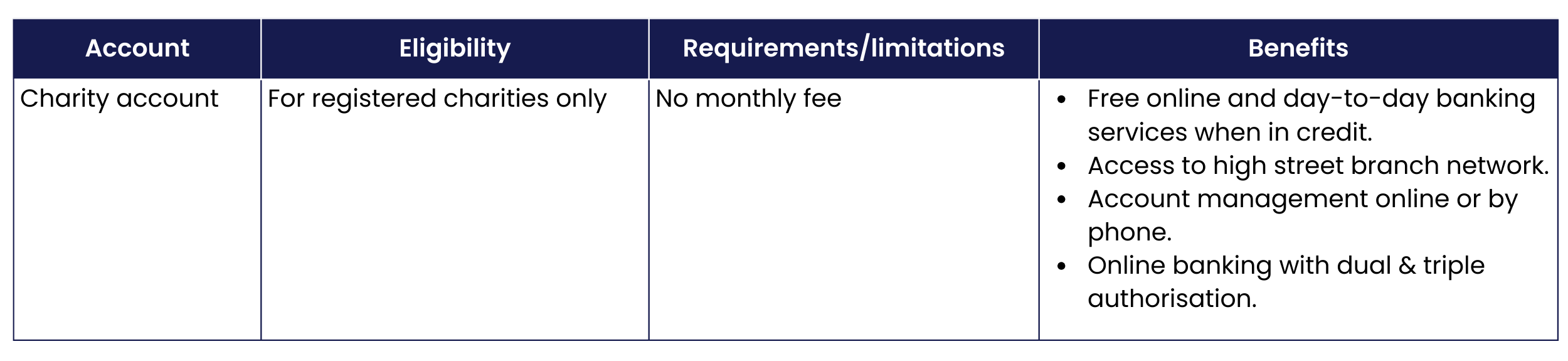
Bank of Scotland/Lloyds charity account
Bank of Scotland/Lloyds community account

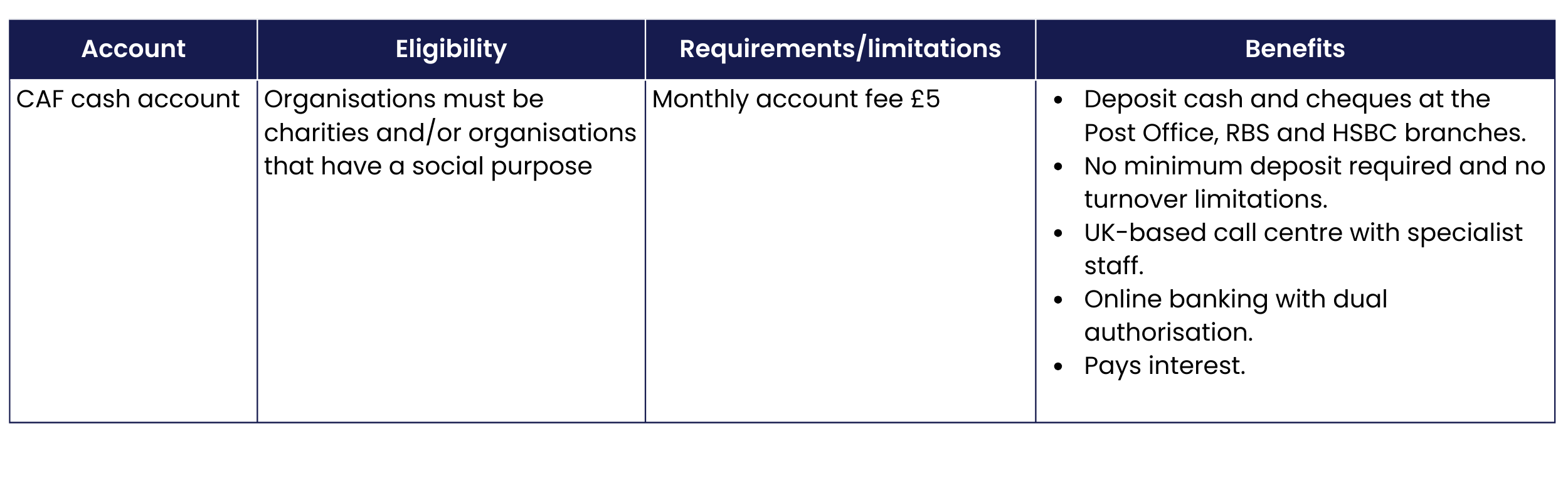
Charities Aid Foundation Bank
Co-operative bank
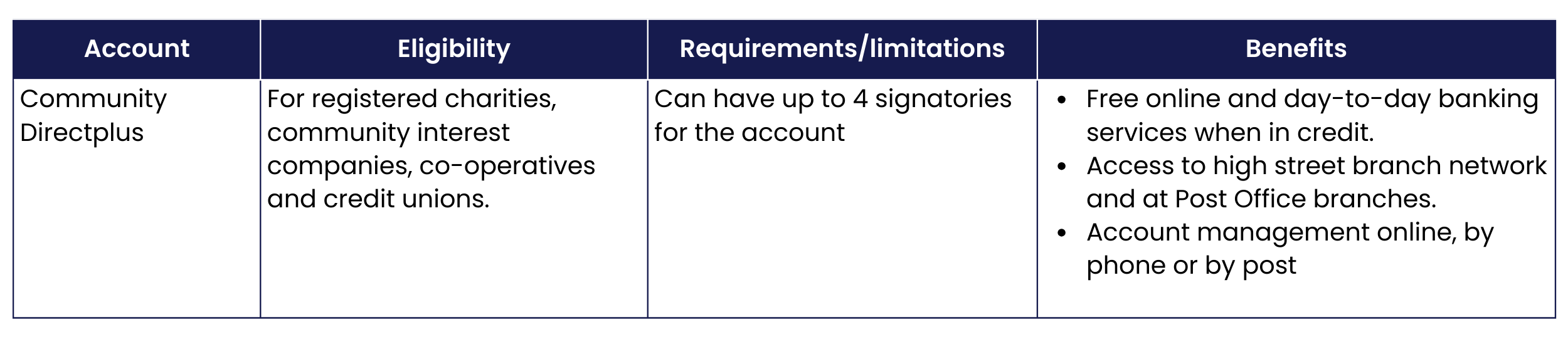
HSBC

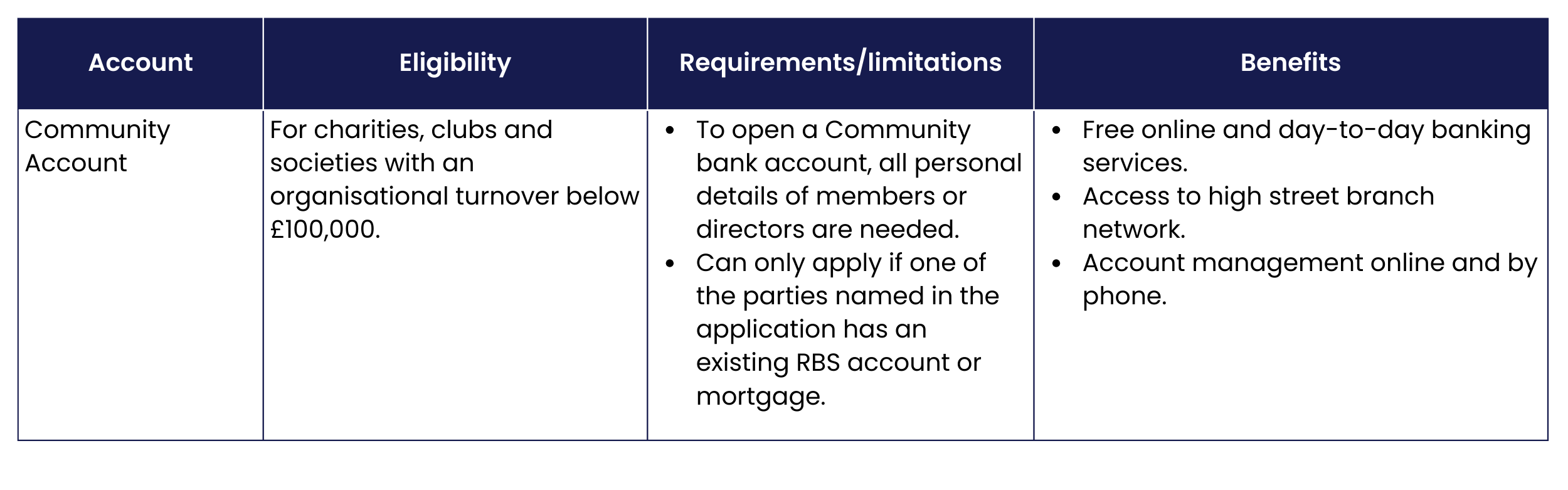
Royal Bank of Scotland
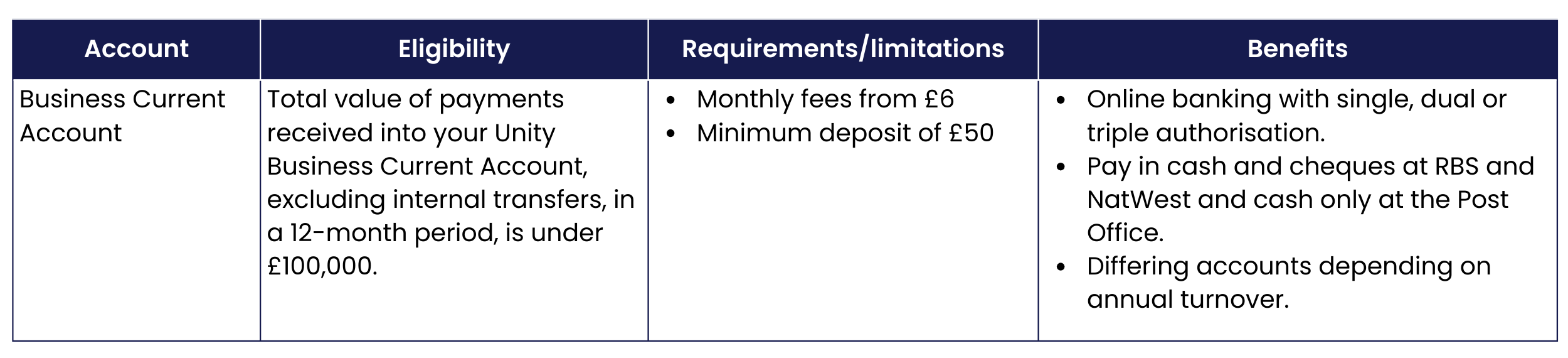
Unity Trust Bank
Virgin Money

Conditions and benefits vary, and can change over time, so check directly with the bank you’re considering opening an account with. We’ve highlighted the main features of current accounts from institutions that have strong links to the voluntary sector, or who have a presence in Scotland.
If you have any questions about unit finances, email the governance and compliance team on governance@girlguiding-scot.org.uk.